TR
TR EN
EN DE
DE RU
RU AR
AR
For centuries, the Turkish bath was never just a place to get clean — it was a ritual of gathering, slowing down and setting time aside for yourself. Today we carry that tradition forward in İskenderun within a modern salon setting, but the essence of the ritual — the sequence of heat, steam and touch — remains largely the same. This article looks at where the hamam tradition comes from, the steps of the classic ritual, and how we've built that experience at our salon.
Where the Tradition Comes From
In Ottoman urban life, the hamam was a central part of neighbourhood social life: bridal baths, pre-holiday visits, weekly meetups with neighbours all revolved around the hamam. Architecturally, it was built around three stages — hot, warm and cool sections — with the heated marble platform known as the "göbek taşı" (belly stone) at its heart. Traces of that traditional layout are still visible in hamam design today; the hot-warm-cool progression remains the backbone of the experience.
Steps of the Classic Ritual
A traditional hamam ritual follows a specific sequence, and that sequence is part of the experience itself:
- Warming up: A few minutes in the hot, steamy room lets the body sweat and pores open. This unhurried stage noticeably deepens the effect of everything that follows.
- Scrub (kese): A textured exfoliating mitt gently removes dead skin cells from the surface. First-timers are often surprised by how invigorating this step feels.
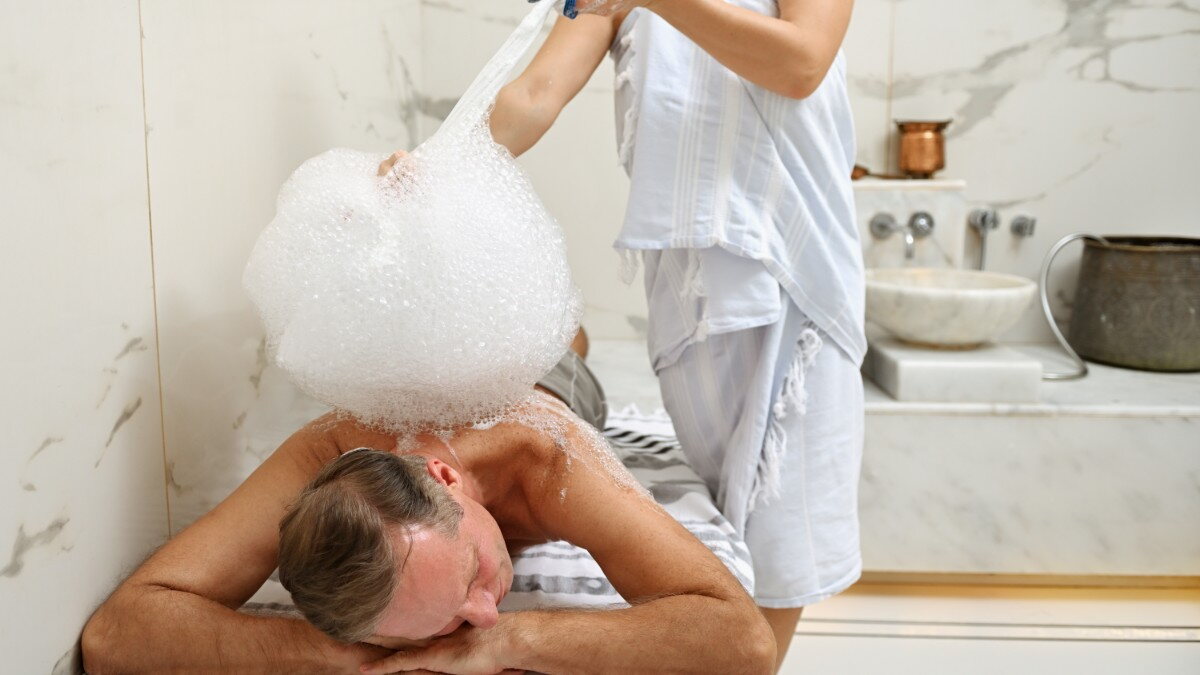
- Foam massage: A soft massage under a generous layer of foam focuses more on relaxation and the comfort of touch.
- Rinse and rest: A warm rinse followed by a short rest in a cooler area completes the ritual.
At our salon, we deliver these steps in our scrub & foam treatment, staying true to the traditional order — you can choose just the warm-up and rest portion, or the full ritual.
What the Hamam Can Do for the Body
Time spent in a hot, steamy environment can contribute to muscle relaxation and an overall sense of ease; many guests tell us they feel noticeably lighter through the shoulders and back afterward. The scrub step helps clear dead skin cells from the surface, and the pores that open under the heat can leave skin looking more refreshed. These effects vary from person to person — if you have an ongoing health condition, letting us know beforehand helps us tailor the experience to you.
Hamam or Sauna?
Another question we hear often is the difference between the hamam and the sauna. The hamam uses moist heat and is built around touch-based rituals (scrub, foam massage), while the sauna relies on dry heat and is more of a quiet, solitary experience. They're not interchangeable — many of our guests choose both, on separate visits or even back-to-back on the same day. If you enjoy moist heat and touch, the hamam is likely the better fit; if you prefer sitting quietly in dry warmth, the sauna may suit you more.
Tips for Your First Hamam Visit
If this will be your first hamam experience, a few small things can help. Eating something light rather than a heavy meal beforehand, and staying well hydrated, makes it easier for your body to adjust to the heat. The pestemal (bath wrap), slippers and towels used at the salon are freshly prepared for every guest, so there's nothing special you need to bring. Don't rush the warm-up stage — letting your body sweat at its own pace makes the scrub and foam steps that follow feel noticeably better.
How Often Should You Visit?
This really comes down to personal preference. Some guests treat the hamam as a monthly maintenance ritual, while others prefer it as a one-off experience around a change of season, before a special occasion, or after a tiring trip. Regular visitors often report a more consistent difference in skin texture and overall relaxation, but a single visit is a satisfying experience on its own too.
The Hamam Through the Seasons
İskenderun's climate shapes the rhythm of the hamam experience too. In winter, stepping into the warm, steamy room after the cold outside feels especially soothing; in summer, the cool rest period afterward often becomes the most-loved part of the ritual. Whichever season you visit, the warm-up, scrub, foam and rest sequence stays the same — what changes is simply your own pace and preference on the day.
Frequently Asked Questions
This is my first hamam visit — how long does it take?
A standard hamam ritual usually takes 45-60 minutes; you're welcome to stay longer in the rest area if you'd like. On your first visit, reception will walk you through the process briefly, and you can ask anything you're curious about beforehand.
Can I book the hamam and a massage on the same day?
Yes — in fact, this is a preferred order, since muscles warmed by the hamam respond better to massage. Just mention this when booking so we can plan the sequence for you.
I have sensitive skin — is the scrub still suitable?
The intensity of the scrub can be adjusted to your skin. If you have sensitive skin or a skin condition, letting your therapist know beforehand allows us to make the treatment gentler for you.