TR
TR EN
EN DE
DE RU
RU AR
AR

Let's be honest: self-massage never replaces a professional session — you cannot reach your own back, and you cannot read a tight spot from the outside. But a few simple techniques genuinely help manage tension between salon visits. Here are the five our therapists most often recommend for home. Under each one we've added the short format we use at the salon: how long it takes, how often you can repeat it, and what to watch out for.
1. For the neck: breathe against resistance
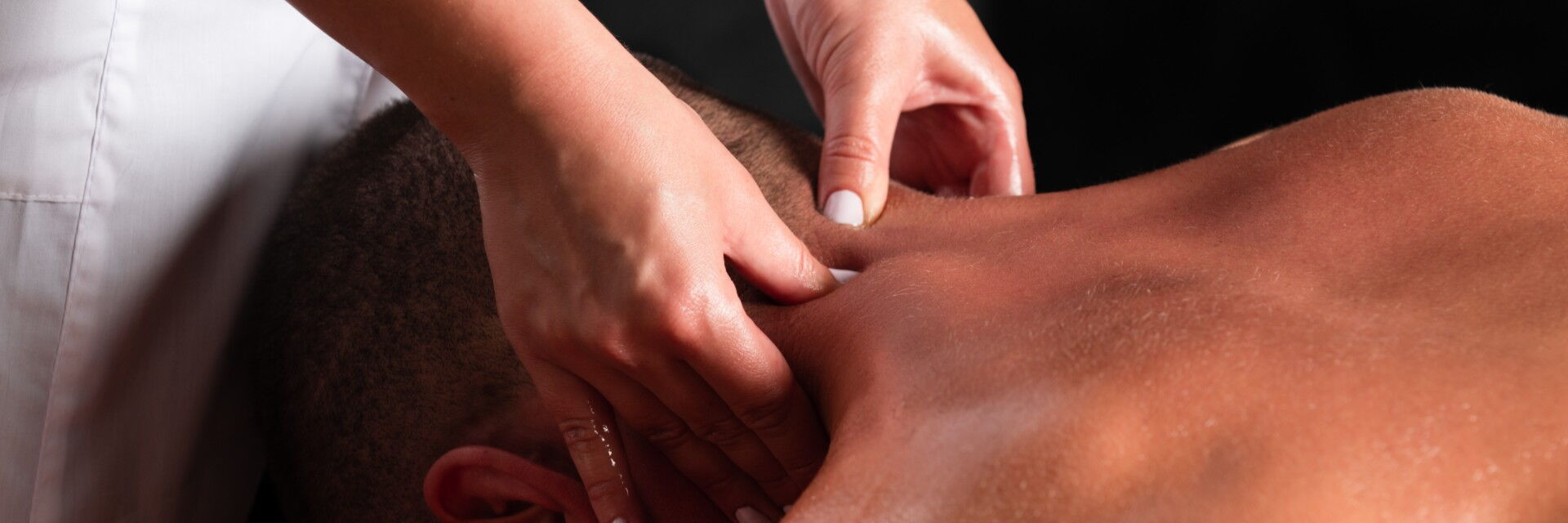
Place your palm on your forehead, press your head gently into it and hold for five breaths. Repeat with the hand behind your head. For a screen-locked neck this is safer than pressing and rubbing.
Time: ~2 min | Repeat: 3 sets | Watch out: Keep the pressure light; stop if you feel dizzy or numb.
2. For the hands: palm sweeps
With one thumb, sweep the opposite palm slowly from wrist to finger bases. After phone-and-keyboard days, two or three minutes bring noticeable relief.
Time: ~2 min | Repeat: 3x each hand | Watch out: Work the soft palm tissue, not the joints; don't bear down hard.
3. For the feet: ball rolling
Seated, roll a tennis ball under your sole from heel to toes. It cannot match the depth of reflexology, but it is fine first aid for end-of-day foot fatigue.
Time: ~3 min | Repeat: 3x each foot | Watch out: Keep the motion slow; stop the ball if you feel sharp pain.
4. For the face: fingertip circles
With clean fingertips, draw small light circles on the temples and jaw joint. Visibly relieving for screen strain and clench-related tension.
Time: ~1 min | Repeat: 3 rounds | Watch out: Don't press on the eyes or directly on the eyelid; keep hands clean.
5. For the back: the wall-ball trick
Trap a tennis ball between the wall and your shoulder blade, bend your knees and glide it slowly over the tight spot — beside the spine, never on it.
Time: ~2 min | Repeat: 3x each shoulder | Watch out: Use the ball against the wall, not on the floor; set the pressure with your breath.
What not to do
Home techniques should stay gentle and controlled. From our years with guests, these are the most common mistakes we see — and these limits are about comfort, not treatment:
- Never press directly on the spine. Whether with a ball or a hand, pressure should always land on the muscle strip beside the spine.
- Don't apply ball pressure to a painful or swollen area. If there is inflammation or swelling, pressure won't ease it; it's better to leave that area alone.
- Don't attempt self-massage on an acute injury. After a fresh sprain, strain or blow, wait and check with your doctor if needed.
- Don't push through numbness, tingling or sharp pain. These are a “stop” signal, not a “press harder” one.
60 seconds at the office: a desk micro-break
If you're at a screen all day, a one-minute break without even standing up is often enough to “reset” the muscles. Here is the mini flow we suggest to guests:
- 0-15 s: Lift your shoulders toward your ears and let them drop slowly; three times.
- 15-35 s: Sweep one palm from wrist to fingers with the opposite thumb twice, then switch hands.
- 35-60 s: Close your eyes for a moment and draw light fingertip circles from beside the nose to the jaw joint.
This micro-break doesn't replace a session; it only takes the edge off accumulated tension.
When should a professional take over?
If tension lasts beyond three days, disturbs your sleep or keeps returning to the same spot, you have reached the limit of self-care. Let's choose the right massage for it together by phone — and for new, severe pain, see your doctor first.
Frequently Asked Questions
Can I do these techniques every day?
As long as you keep them light and don't push into pain, short daily sessions are fine for most people. Splitting a few minutes across the day is more comfortable than working a long stretch at once. If you have an existing condition, we'd suggest checking with your doctor first.
What can I use if I don't have a tennis ball?
Any ball of similar firmness that rolls and doesn't pinch the skin works — a small rubber ball or a massage ball is fine too. Avoid very hard or angular objects. What matters is that the pressure stays soft and controllable.
After a long day in İskenderun, what should I try first?
After a day on your feet at the harbour or industrial pace, most of our guests mention foot and neck fatigue most of all. In the evening at home, try the ball roll for the feet first, then the breathe-against-resistance move for the neck; if the same spot is still tight the next day, call the salon and we'll decide together.